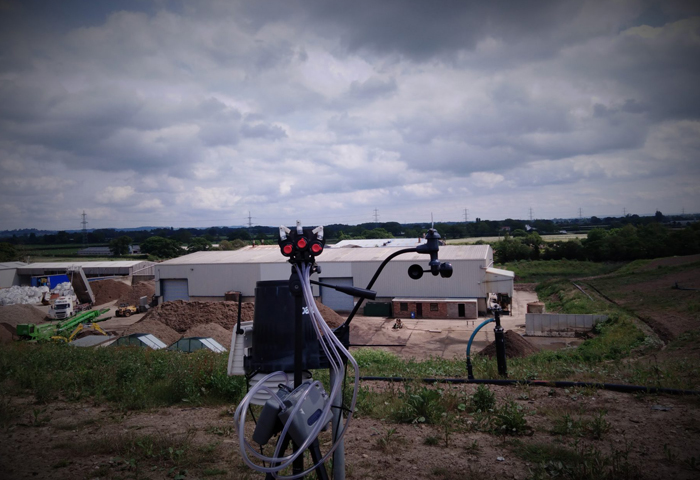
Bioaerosol monitoring helps you to ensure the safety of your workforce and keeps you
compliant to Environment Agency standards. Wasmanpro can offer you complete
Bioaerosol Monitoring and Bioaerosol monitoring analysis from both captured (stack)
and uncaptured (ambient) sources.
Bioaerosols are found naturally within the environment. They consist of airborne
particles that contain living organisms, such as bacteria, fungi and viruses or
parts of living organisms, such as plant pollen, spores and end toxins from
bacterial cells or mycotoxins from fungi. The components of a bioaerosol range in
size from around 0.02 to 100 micrometers (µm) in diameter.
Key Benefits:
Keep your employees protected
from potential bioaerosol related
health complications
Remain compliant to
Environment Agency standards
Avoid potential fines and
prosecutions
Have the confidence that you are
keeping yourself and employees
safe with protective measures
Receive reliable and accurate
results with an accredited service
Gain expert advice and guidance
Description:
Exposure to bioaerosols can be detrimental to health. Bioaerosols are also referred
to as
biological aerosol or organic dust and they are airborne microorganisms such as
bacteria,
actinomycetes, fungi, pollen, moulds or viruses. Typically, Bioaerosols are not
visible to the
human eye and are able to penetrate deeply into our respiratory systems. Constant
and
cumulative exposure to bioaerosols can cause a range of health problems including
gastrointestinal illness, bronchitis, and cancer.
It is important to monitor bioaerosols in the workplace to ensure that exposure is
controlled as
much as possible to protect yourself and employees from consequent health problems.
Measures can include PPE, establishment of risk zones and engineered controls (such
as airconditioned vehicle cabs).
Bioaerosol monitoring involves:
Continual monitoring of wind speed/direction;
Sampling upwind of site to measure the concentrations of microorganisms that are
blowing onto the site;
Sampling downwind of the site to measure concentrations of microorganisms that are
blowing of the site;
Sampling at a point nearest closest sensitive receptor to the site.